
Discover the rich history of JAFA, bridging African Diaspora and Japanese communities through cultural exchange, education, and collaborative initiatives to empower future generations.
From Yasuke, the African samurai of Japan, to the groundbreaking Negro League Baseball tour of 1927, our story highlights courage, resilience, and cultural connection. Through decades of collaboration, learning, and artistic exchange, JAFA continues to inspire new generations to celebrate heritage and build lasting cross-cultural bonds.
Discover the origins of JAFA and our exciting plans for the future.
In 1579, Yasuke, a man of African origin, arrived in Japan traveling with Jesuit missionary Alessandro Valignano. He became the first known African samurai, admired for his strength, intellect, and dignity. Introduced to warlord Oda Nobunaga, Yasuke was awarded residence, a katana, and the rare status of samurai. He fought alongside Nobunaga during events such as the Honnō-ji Incident of 1582.
Standing over six feet tall, Yasuke captivated the Japanese people, and his story endures in books, films, and documentaries. Notably, Jun Soejima portrayed Yasuke in the historical film Kubi, connecting his legacy to JAFA’s mission of honoring heritage and cross-cultural respect.
The Manhattan was a whaling ship that, in 1845, rescued 22 Japanese sailors who had been shipwrecked off the coast of Japan. Captain Mercator Cooper of Southampton, New York, sailed to Japan to return the stranded sailors—despite Japan’s sakoku (closed-country) policy.
On April 18, 1845, the Manhattan entered Tokyo Bay (then Edo Bay) and was surrounded by hundreds of Japanese boats. Although foreign ships were typically turned away or restricted to Nagasaki, the Japanese allowed Cooper to remain briefly and accepted the return of their countrymen.
The first documented African Americans to visit Japan did so aboard the Manhattan in 1845. Historical research, including ship logs and crew records, shows that African American sailors were part of the multi-ethnic crew. Pyrrhus Concer, specifically, is noted as part of the crew.
These whaling and merchant ships were among the most racially integrated workplaces of the 19th century, and maritime historians widely agree that Black sailors were aboard. This 1845 visit marks the first known arrival of African Americans in Japan, predating Commodore Perry’s more famous 1853 expedition by nearly a decade.
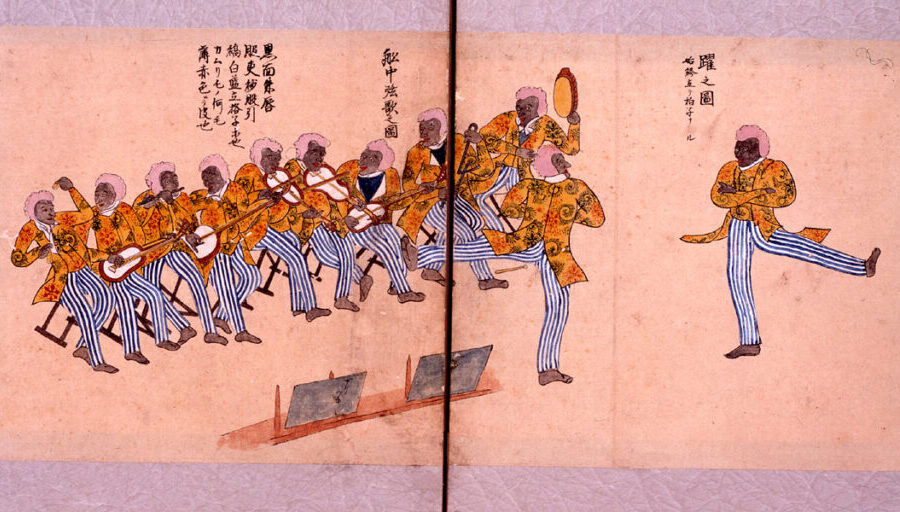
During the historic 1853–1854 expedition to Japan, African Americans served as crew members aboard Commodore Matthew Perry’s fleet. Though often unnamed or under-documented in official records, their presence is confirmed through naval rosters and secondary accounts. Some of these men were free, while others may have been enslaved or held in ambiguous legal statuses, reflecting the racially stratified society of antebellum America.
A troubling aspect of the Perry mission was the staging of Blackface Minstrel shows by white sailors, performed for both the American crew and Japanese dignitaries. These shows featured white performers in blackface, portraying exaggerated and degrading caricatures of African Americans. In some cases, African American crew members were forced to watch—or even participate in—these racist performances, often in full view of Japanese audiences unfamiliar with American racial dynamics.
According to scholar William Bridges IV and others, these performances were framed as “cultural entertainment,” intended to showcase aspects of American life and leisure to the Japanese. Tragically, they also conveyed a dehumanizing racial ideology, positioning Blackness as comic and inferior—a message that influenced early Japanese perceptions of African Americans for decades to come.
In the spring of 1927, a groundbreaking event forever linked African American baseball with Japanese sports culture. The Philadelphia Royal Giants, a team of Black professional baseball players from the United States, embarked on a historic goodwill tour of Japan. This marked the first time a Negro League team played in Japan, and its impact continues to echo nearly a century later.
According to contemporaneous coverage in Japanese American newspapers, including Rafu Shimpo, and corroborated by prewar community records, the 1927 Royal Giants tour was supported by Japanese American athletic organizations on the U.S. West Coast, including the Fresno Athletic Club, which played a role in organizing and promoting baseball activities during this period.
Kenichi Zenimura (銭村健一), widely recognized in Japanese American press accounts as a central figure in prewar baseball development, worked with Japanese university organizers and athletic associations to help facilitate the Royal Giants’ games in Japan. His involvement reflected longstanding people-to-people ties between Japanese American baseball communities and Japan.
Japanese American community sources also identify Joji (George) Irie (入江譲治) of Los Angeles as having assisted in the management and coordination of the tour in 1927. Irie’s role is noted in Japanese American press and community records documenting the organizational efforts behind early international baseball exchanges.
On the American side, team organizer and manager Lon Goodwin assembled the touring roster and served as an intermediary between African American players and Japanese and Japanese American promoters. His role is documented in contemporaneous press coverage, travel records, and independent historical research on early Negro League international exhibitions.
The Philadelphia Royal Giants featured top-tier talent drawn from the Negro Leagues, including:
Biz Mackey – future Hall of Famer and respected leader
Andy Cooper – dominant left-handed pitcher
Rap Dixon – hard-hitting outfielder with speed and flair
Beyond their athletic ability, these players were admired for:
Professional discipline and teamwork
Inspiring younger athletes in Japan
Representing African American excellence abroad
Though barred from Major League Baseball due to segregation, they showcased skill, pride, and resilience on the international stage.
During their visit, the Royal Giants played over 20 exhibition games in major Japanese cities, including:
Tokyo
Osaka
Kobe
Yokohama
Their opponents featured:
Elite university teams such as Waseda and Keio
Local all-star and industrial league squads
Thousands of fans filled stadiums to witness the Giants’ speed, power, and style. Their performances inspired respect, cross-cultural admiration, and earned them the affectionate nickname: “Black Gental Giants”
The tour extended beyond the baseball field:
In contrast to the racial discrimination faced in the United States, the African American players were treated with dignity and respect in Japan.

For many, it was their first experience being received as honored guests and athletes rather than second-class citizens.

The tour became a profound cultural exchange, fostering mutual admiration and laying groundwork for Afro-Asian solidarity and people-to-people diplomacy.

The historic 1927 tour is chronicled in the Japanese publication Kuroki Yasashiki Giantsu (黒きやさしきジャイアンツ — Black Gentle Giants) by baseball historian Kazuo Sayama (佐山 和夫). The work features rare photographs, detailed player profiles, and contemporary source material that illuminate the tour’s organization and its lasting impact on both African American and Japanese baseball communities.
Sayama-san has authored numerous Japanese-language books on Negro League history, including biographical studies of legendary players such as Satchel Paige, and is widely regarded as a leading authority on prewar international baseball exchange. In recognition of his lifelong contributions to baseball scholarship and historical preservation, Kazuo Sayama was inducted into the Japan Baseball Hall of Fame in 2021.
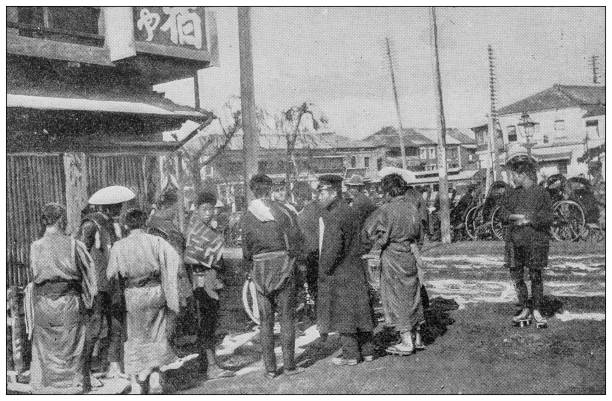
For JAFA, the 1927 Philadelphia Royal Giants tour is:
A cornerstone of cultural diplomacy and pride
A symbol of mutual respect and enduring friendship
An example of how sport can bridge cultures and build lasting connections
In 2027, JAFA, in collaboration with partners, will commemorate the 100th anniversary of the 1927 Philadelphia Royal Giants Baseball Tour to Japan.
This historic celebration will honor:
The trailblazing athletes who transcended the game to build cultural bridges
Their courage, talent, and vision that redefined the global meaning of sport
JAFA invites your support and participation in this milestone event to celebrate a century of cross-cultural baseball legacy.
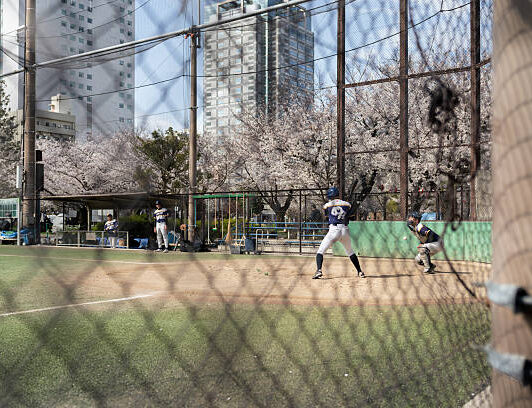

Cultural exchange programs with students, artists, and historians to foster collaboration, learning, and mutual understanding.

Traveling museum exhibits showcasing memorabilia, photos, and stories from the 1927 Philadelphia Royal Giants Baseball Tour.

Academic panels and film screenings highlighting Negro League history and the tour’s significance in promoting cultural diplomacy.

Celebrate the Philadelphia Royal Giants and Fresno Athletic Club, promote historical awareness for youth, and strengthen cross-cultural respect and understanding.
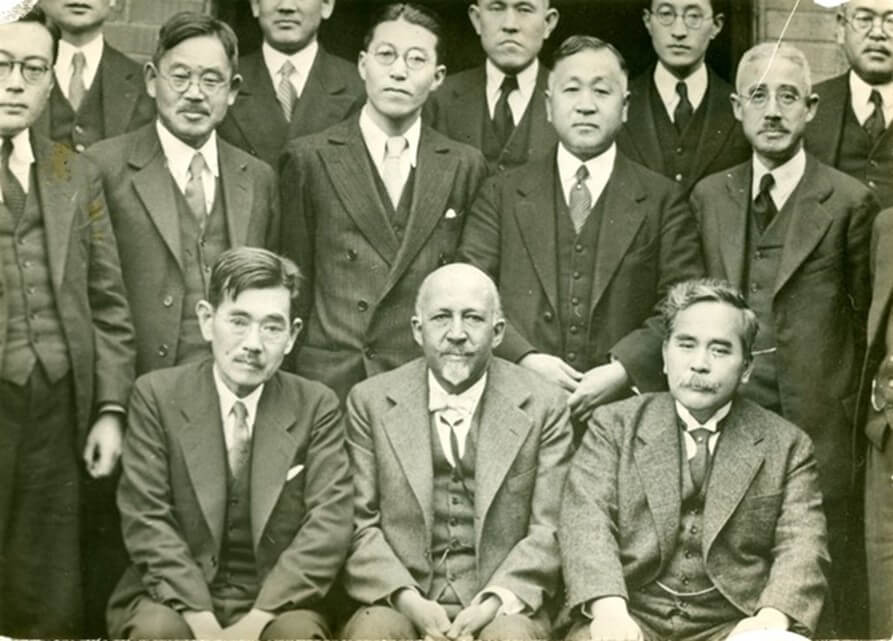
In the spring of 1936, W.E.B. Du Bois, the eminent African American scholar and civil rights leader, visited Japan for six weeks as part of a global tour that also included China and the Soviet Union. His visit occurred during a critical moment in world history, as Japan was asserting itself on the global stage amidst growing tensions with the West.
Du Bois traveled across Japan, including Tokyo and Kyoto, meeting:
Japanese officials
Scholars and students
Journalists
He spoke about African American struggles, the global color line, and shared experiences of nonwhite peoples resisting Western imperialism.
Du Bois admired Japan’s rapid modernization and independence from colonial rule. While impressed by Japan’s progress, he remained cautious of its growing militarism and imperial ambitions, particularly during his visit to Manchukuo, the Japanese-controlled region of northeast China.
Du Bois’s engagement with Japan reflected his evolving views on international solidarity.
His writings, including essays like The Land of the Rising Sun, explored global anti-colonialism and the potential for alliances among oppressed peoples.
According to Dr. Gerald Horne (Facing the Rising Sun: African Americans, Japan, and the Rise of Afro-Asian Solidarity), this visit marked a turning point in African American internationalism and laid the intellectual groundwork for later Afro-Asian solidarity movements, including Bandung and the Non-Aligned Movement.
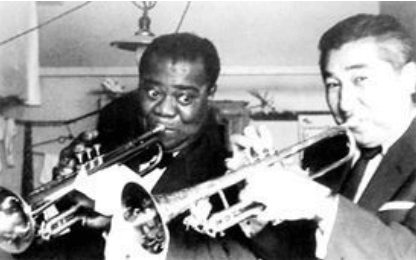
During the 1920s–1980s, African American musicians introduced jazz to Japanese port cities such as Kobe and Yokohama, giving rise to the Jazz Kissa (Café) culture that continues to thrive today. This period helped establish a lasting musical and cultural exchange between the African Diaspora and Japan.
WWII Japanese Disinformation (1937-1945):
Leaflets targeting Black U.S. soldiers highlight racism in America.
English Teachers: Many African American women served as civilian educators, teaching English to Japanese students and professionals as part of the U.S. military’s educational outreach programs and post-occupation rebuilding efforts.
Postal & Administrative Workers: As part of the Women’s Army Corps (WAC) and civil service, African American women worked in military post offices and communications units across Japan, helping maintain morale and logistical support for troops abroad.
Community Builders: These women also helped create support networks for Black soldiers and civilians, organizing social clubs, church gatherings, and cultural exchange activities with Japanese communities.
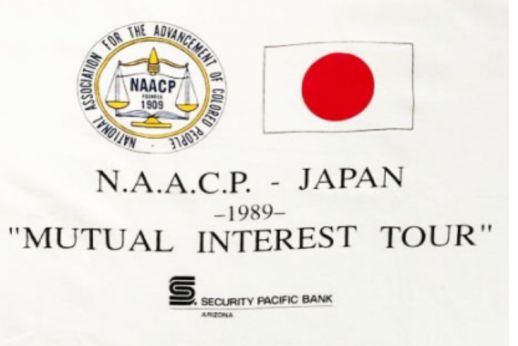
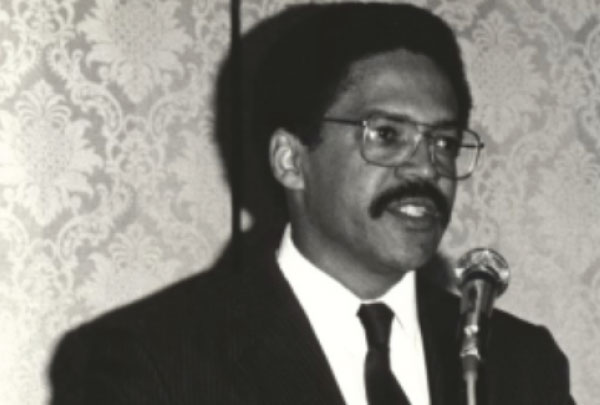
Warren Latham, pictured to the left, was one of the two founding vice presidents of JAFA, which was established to promote friendship and cultural exchange between the African Diaspora and the people of Japan. Early initiatives included hosting civil rights leaders Rev. Dr. Ralph Abernathy and Hosea Williams, and co-sponsoring the 1989 NAACP/Japan Mutual Interest Tour led by Mr. James Martin of the San Francisco NAACP. JAFA’s founding was supported by key allies in Japan, including Shigeharu Matsumoto of the International House of Japan, Professor Kazuko Suzuki of Waseda University, her husband Hiro Suzuki, Seiho Tajiri and others.
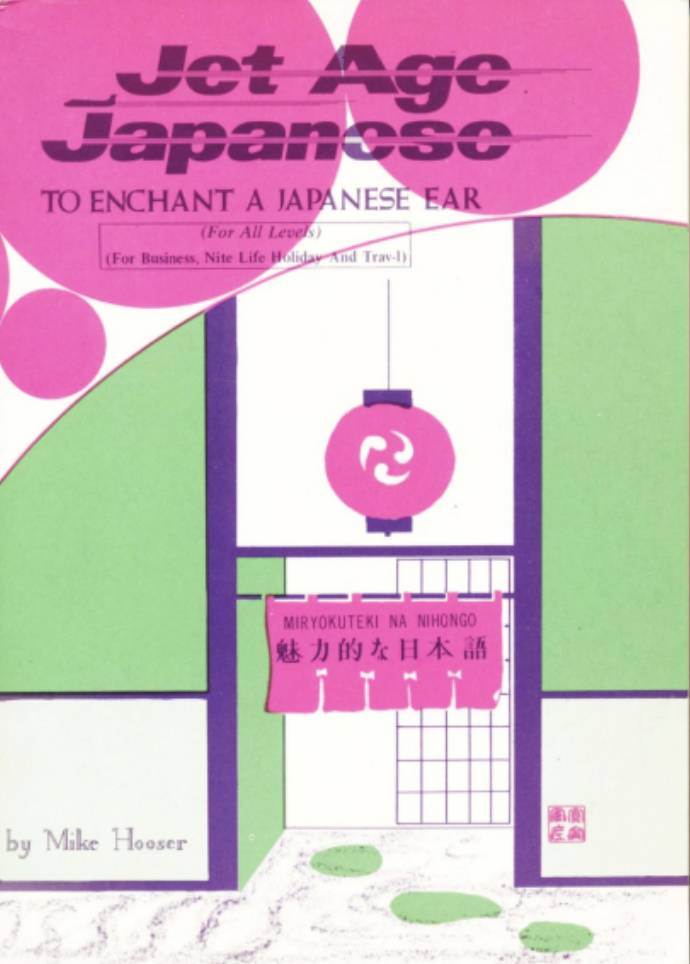
Mike Hooser was a pioneering American educator, author, and early supporter of the Japan Afro-American Friendship Association (JAFA), best known for his groundbreaking language guide Jet Age Japanese: To Enchant a Japanese Ear. A native of New York, Mike arrived in Japan in 1965 as part of a U.S. government-sponsored summer language program administered through Columbia University.
Driven by a deep commitment to mastering the Japanese language and culture, Mike pursued formal studies at several of Japan’s most respected institutions. He was a graduate of Waseda University, completed intensive Japanese language training at the Osaka University of Foreign Studies, and undertook two additional years of study at the Tokyo University of Education. His academic dedication led to a teaching position as a lecturer at Senshu University, where he shared his passion for cross-cultural communication.
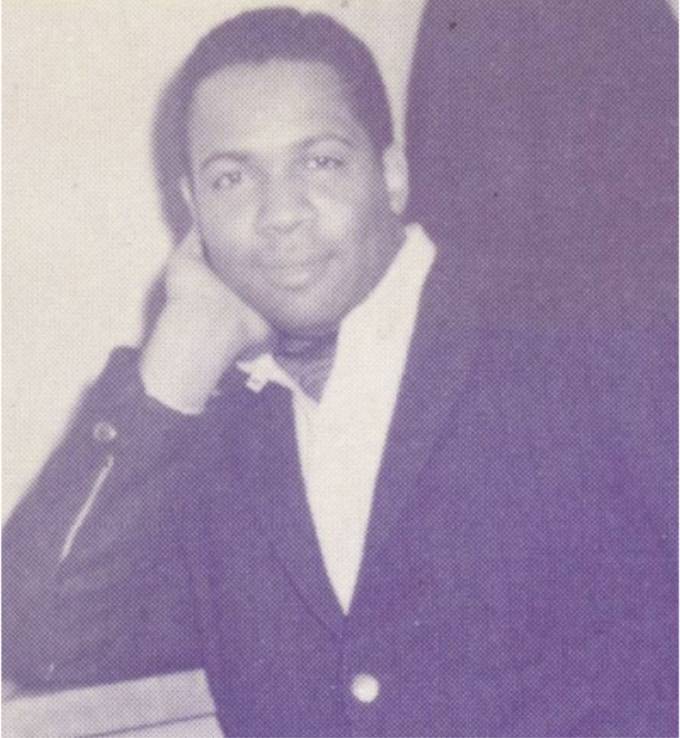
Mike’s work, including Jet Age Japanese, published in 1970 and other practical guides like Scratch N’ Mimic Hiragana and Visitor’s Japanese Conversation, helped demystify spoken Japanese for English-speaking learners during a time when few accessible materials existed. His emphasis on phonetic clarity and natural-sounding Japanese speech reflected his belief that language learning should be engaging, respectful, and rooted in cultural nuance.
As one of JAFA’s early members and supporters, Mike contributed to the foundation of meaningful dialogue and understanding between the African Diaspora and Japanese community. His legacy lives on in the pages of his work and in the bridges he helped build between cultures.
Bill Dorsey from Miami, was a U.S. military veteran who found a second home in Japan following his service. Arriving during a transformative period in U.S.–Japan relations, he brought with him a commanding presence, a disciplined work ethic, and a passion for cross-cultural engagement.
In the early 1970s, Bill transitioned into acting, quickly becoming a recognizable figure in Japanese film and television. His towering stature, expressive range, and fluency in Japanese earned him roles in popular productions such as:
The Morocco branch leader Mohammed in Kamen Rider (Episode 68)
Big Saturn, a powerful boxing opponent in J.A.K.Q. Dengekitai
Appearances in Denshi Sentai Denziman, The Return of Sister Street Fighter, Esupai, Space Sheriff Gavan, and Sharivan
Bill’s work helped normalize the presence of African American characters in Japanese media during a time when such representation was rare.
While living and working in Japan, Bill married Ikuko Takahashi and was the father of actor Jun Soejima and professional basketball player Michael Takahashi, both of whom have continued to shape Japan’s entertainment and sports worlds.
Off-screen, Bill served as a mentor and talent scout, using his industry experience to guide aspiring actors, musicians, and bilingual performers into the Japanese entertainment scene. He actively sought to create opportunities for diverse talent, bridging cultures and helping others succeed in an unfamiliar environment.
Bill was an early and enthusiastic supporter of the JAFA, contributing to its founding vision of cultural exchange, mutual respect, and opportunity for African Americans and Japanese. His presence and support lent visibility and authenticity to JAFA’s mission during its formative years in Tokyo.
Bill Dorsey passed away in 1989, but his legacy endures through his work, his children, and the lasting relationships he helped build between African Americans and Japanese. A trailblazer in both media and multicultural community-building, Bill embodied the spirit of JAFA: bridging people, cultures, and generations.
Kazuko Suzuki was a pioneering professor at Waseda University during the 1980s, recognized for her leadership in women’s studies and her lifelong commitment to social equity and international understanding. A respected educator and advocate, Dr. Suzuki was also a founding member of the Japan Afro American Friendship Association (JAFA), helping to lay the groundwork for one of the earliest Black-Japanese cultural exchange organizations in Tokyo.
At Waseda University, Dr. Suzuki specialized in feminist theory, gender and society, and the evolving roles of women in modern Japan. During a time when gender studies were still emerging in Japan, she:
Her scholarship emphasized both theoretical rigor and real-world relevance, exploring the intersections of gender, labor, and cultural identity in Japan’s rapidly changing society.
In 1981, Hiroaki Suzuki was among the original Japanese members who came together with the African Diaspora’s educators, professionals, and cultural leaders to establish the JAFA in Tokyo. As JAFA’s first Japanese Vice President, Mr. Suzuki played a crucial role in shaping the organization’s early direction and vision.
From the beginning, Mr. Suzuki was a steadfast advocate for cross-cultural understanding. He helped organize JAFA’s inaugural public forums, guest lectures, and cultural events that created space for meaningful dialogue between the African Diaspora and Japanese communities. He also championed the active participation of youth and women in JAFA’s mission—believing strongly in the importance of diverse voices in international friendship.
Mr. Suzuki’s leadership extended beyond JAFA. In 1999, building on his long friendship with Kenneth P. Morse of MIT, he co-founded the MIT-Venture Forum Japan (MIT-VFJ) to promote innovation and global collaboration between MIT alumni and Japan’s technology sector. His efforts helped connect Japanese entrepreneurship with international networks grounded in education and inclusion.
Throughout his distinguished career—as a technology executive, venture strategist, and cultural ambassador—Mr. Suzuki has remained committed to the values at JAFA’s core. His work reflects the belief that true friendship between nations begins with human connection, mutual respect, and shared purpose.
The Suzuki’s early contributions, along with those of other founding members, laid the foundation for JAFA’s enduring legacy as a platform for cultural exchange, social progress, and historical remembrance.
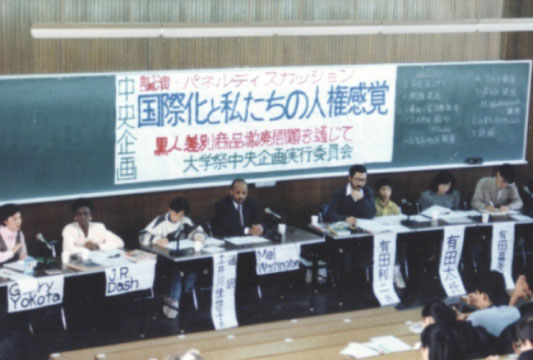
Notable Figure: Dr. Michio Arimitsu at Keio University facilitated dialogues on African American literature and its relevance to Japanese social thought.